Fire Safety: Fire is Not a Mystery
✅ Introduction: Fire is Not a Mystery
In a fabrication shop, fire is often seen as a sudden, chaotic accident. But science tells us a different story. Fire is a very predictable chemical reaction. If you understand how it starts, you can stop it before it even begins.
The Humanoid Truth: Most people panic during a fire because they don't understand what they are fighting. They grab the nearest bucket of water, which—in a metal shop—can sometimes make a fire ten times worse.
👉🏻 The Goal: To turn every worker into a "Fire Scientist" who knows exactly what to do in the first 30 seconds of an outbreak.
✅ 1. The Fire Triangle: How a Fire Breathes
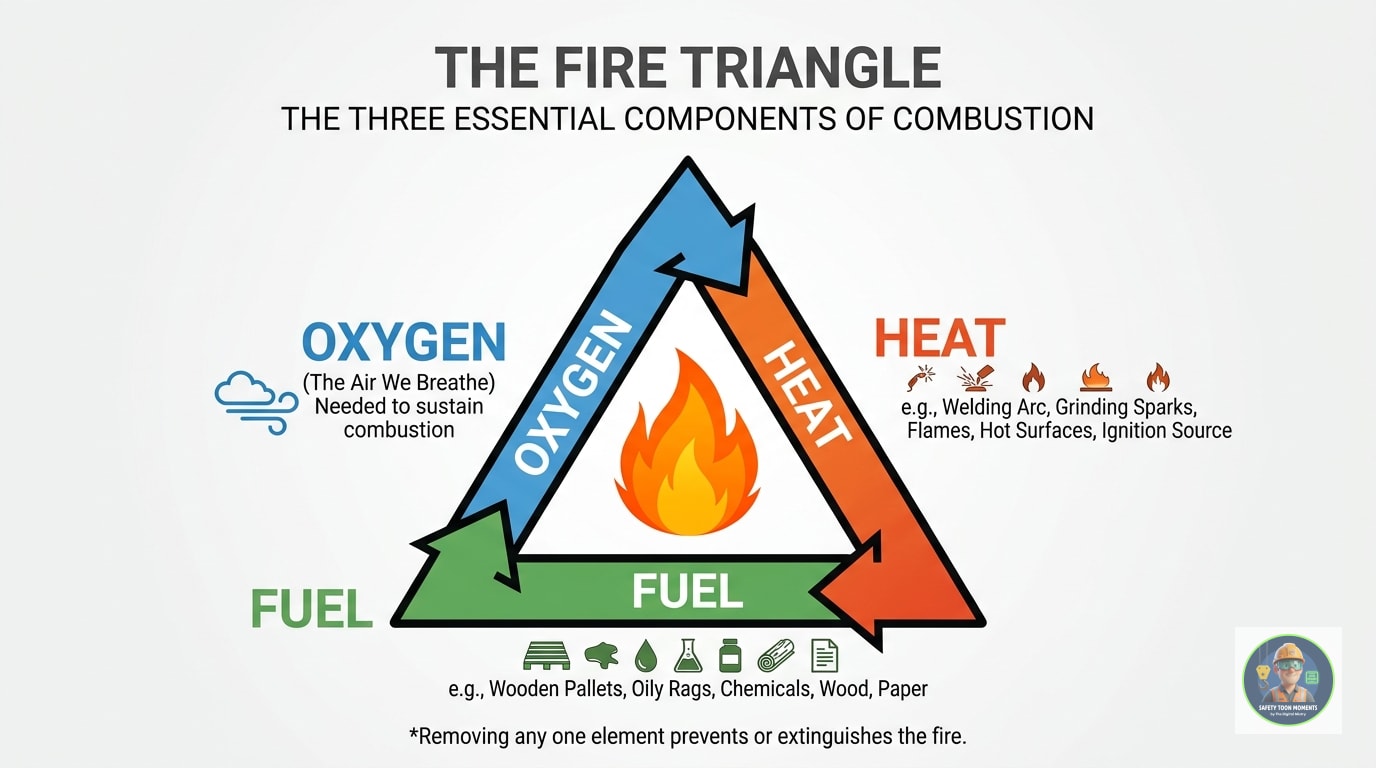
To have a fire, you need three ingredients. If you remove just ONE, the fire dies instantly.
- Fuel: Anything that can burn. In our shops, this is scrap wood, cardboard boxes, or thinning chemicals.
- Heat: The "Match." This is your welding torch, your plasma cutter, or even a faulty electrical wire.
- Oxygen: The air around us.
The "Humanoid" Lesson: Think of fire like a stool with three legs. Kick one leg away, and the stool falls. This is how we extinguish fires.
✅ 2. The 5 Classes of Fire (Know Your Enemy)
Not all fires are the same. In India, we follow the classification system that helps us choose the right "weapon":
- Class A (Ordinary Solids): Wood, paper, cloth, and trash.
- Class B (Flammable Liquids): Petrol, diesel, thinners, paints, and grease.
- Class C (Flammable Gases): LPG, Acetylene, and Hydrogen.
- Class D (Combustible Metals): This is the most dangerous for us. Magnesium, Aluminum dust, and Potassium.
- Class E (Electrical Fires): Live wires, motors, and switchboards.
✅ 3. Indian Legal Shield: Fire Safety Standards
The Factories Act, 1948 and the Bureau of Indian Standards (BIS) set the rules for your protection: Section 38 (Precautions in case of fire): Mandates that every factory must have adequate fire-fighting equipment and that workers must be trained to use it.
- IS 2190: This is the Indian Standard for the selection, installation, and maintenance of first-aid fire extinguishers. It requires your shop to have monthly inspections of all extinguishers.
- IS 15683: The standard for portable fire extinguishers in India. Look for this code on the label of your red cylinders.
✅ 4. Choosing Your Weapon: Types of Extinguishers
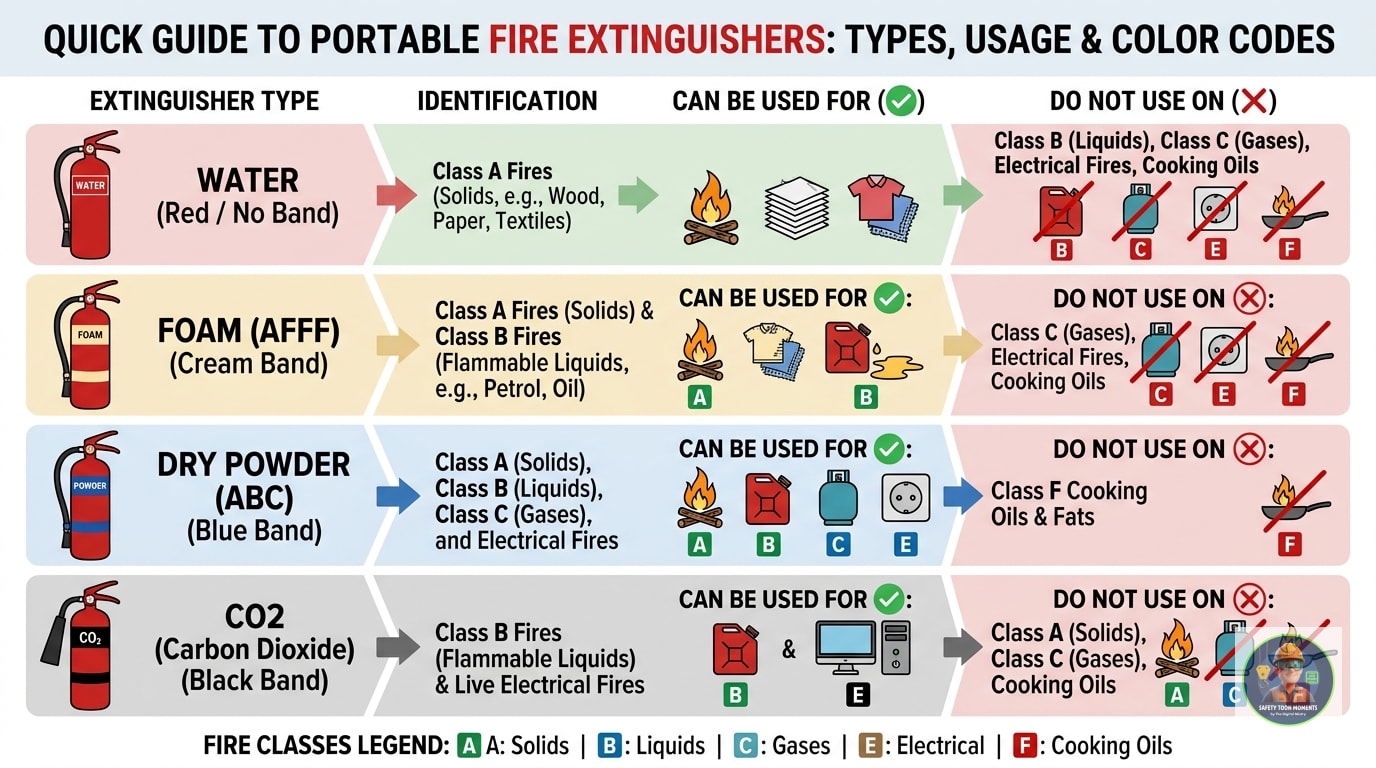
- Water Extinguishers (Red Label): Use ONLY on Class A (Wood/Paper). NEVER use on oil or electrical fires.
- Dry Powder (DCP/ABC Type): The "Universal" choice for most shops. It works on A, B, C, and E.
- CO2 (Black Band): Best for Electrical (Class E) because it leaves no residue and doesn't damage expensive CNC electronics.
- Metal Powder (Class D): If you work with Aluminum or Magnesium, you MUST have a dedicated "Yellow Label" Class D extinguisher. Water on a metal fire causes a violent explosion!
✅ 5. How to Use an Extinguisher: The P.A.S.S. Method
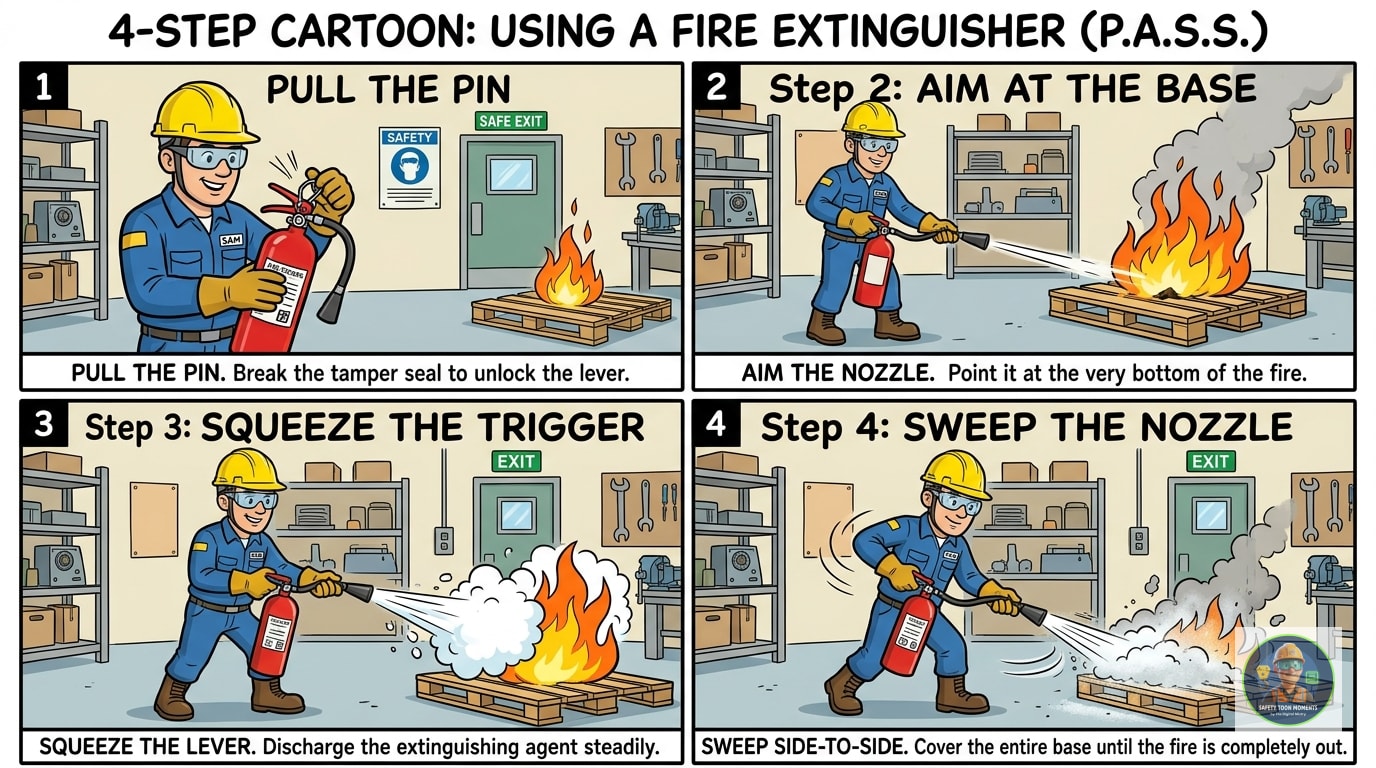
When the alarm goes off, remember this four-letter word:
- 👉🏻 P - Pull: Pull the safety pin.
- 👉🏻 A - Aim: Aim the nozzle at the base of the fire (the fuel), not the flames.
- 👉🏻 S - Squeeze: Squeeze the handle to release the agent.
- 👉🏻 S - Sweep: Sweep from side to side until the fire is out.
✅ 6. The "Golden Rule" of Fire Safety
In a fabrication shop, the biggest risk is the smoldering fire.
👉🏻 Example: A spark falls into a pile of sawdust at 4:30 PM. Everyone goes home at 5:00 PM. By 9:00 PM, the shop is a wall of flame.
👉🏻 The Solution: Always conduct a 60-minute "Fire Walk" after the last weld of the day.
✅ 7. Best Practices / Worker Checklist
- Do I know where the TWO nearest fire extinguishers are?
- Is the pressure gauge on the extinguisher in the "Green" zone?
- Are the fire exits clear of scrap metal and pallets?
- Do I know how to distinguish between an electrical fire and a trash fire?
- Is the fire alarm system tested and audible in my welding bay?
🎯 Conclusion: Don't Feed the Triangle Fire safety isn't just about red cylinders on the wall. it's about being aware of the "Fuel" and "Heat" you create every day. By respecting the Factories Act guidelines and the IS 2190 standards, you ensure that the only things we burn in this shop are our welding rods—never our workshop.
Stay vigilant. Stay safe.
To get the related informative documents visit to www.safetytoonmoments.com/documents