
Hand Safety and the Science of Glove Selection
✅ Introduction: The Fabricator’s Hands
In a fabrication shop, your hands are your livelihood. They feel the texture of the steel, guide the welding torch, and calibrate the CNC machine. But because we use them for everything, we often take them for granted—until a sharp edge or a pinch point reminds us how fragile they are.
The Humanoid Truth: We often take our gloves off to "feel the fit" of a bolt or to use our phones, thinking it will only take a second. But a second is all it takes for a jagged sheet metal edge to cause a deep laceration that requires 20 stitches.
👉🏻 The Goal: To ensure every worker knows that their hands are irreplaceable and understands exactly which "armor" (gloves) to wear for every specific task.
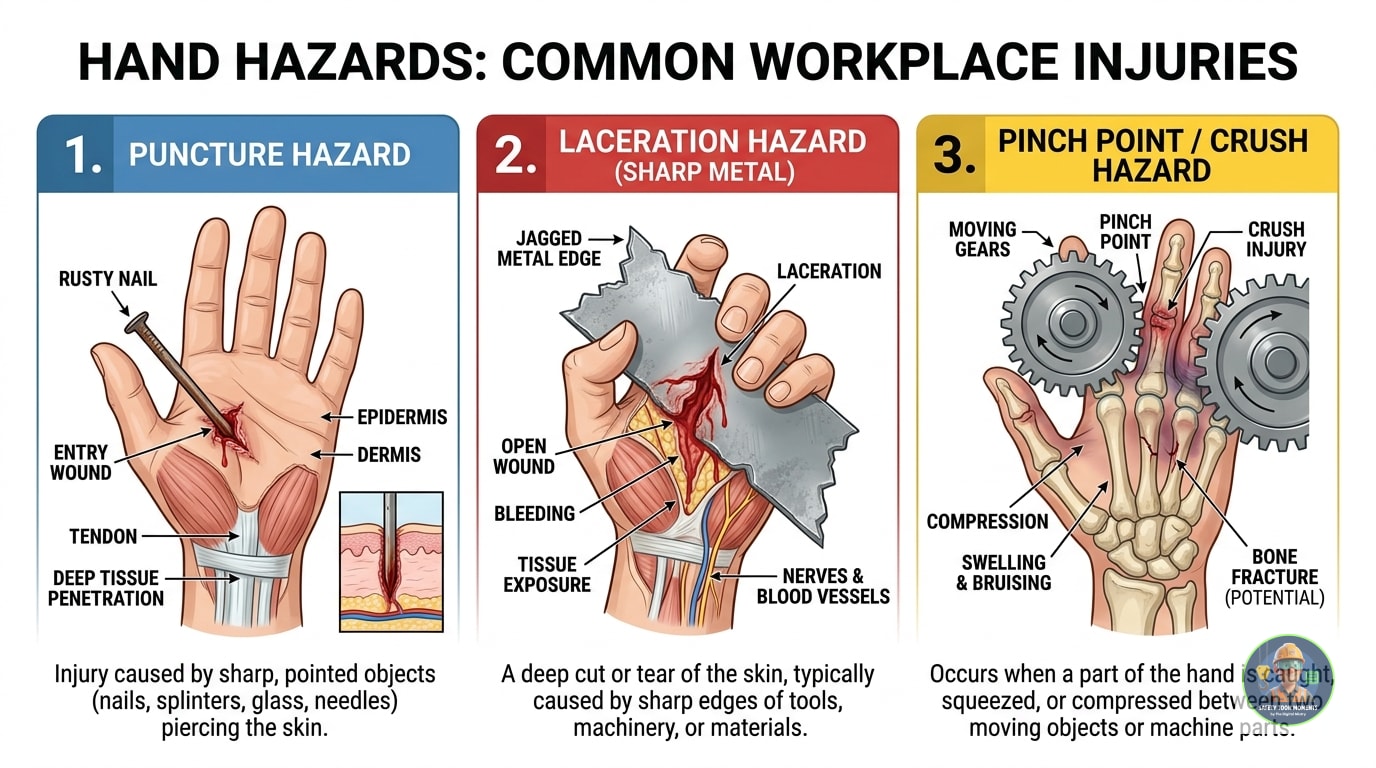
✅ 1. The Big Three: Common Hand Hazards
In our workshops—from the busy streets of Ahmedabad to the industrial hubs of Chennai—hand injuries usually come from three sources:
- Mechanical Hazards: Cuts from sharp sheet metal, punctures from wire brushes, and crushes from heavy jigs.
- Thermal Hazards: Burns from hot slag, radiant heat from TIG welding, and "cold burns" from handling liquid nitrogen or CO2.
- Chemical Hazards: Skin irritation (dermatitis) from degreasers, oils, and pickling pastes.
👉🏻 The "Humanoid" Lesson:
- Your hand has 27 bones and a complex web of nerves. Once a nerve is cut, your hand might never "feel" the same again. Protecting it isn't just a rule; it's a career-saving habit.
✅ 2. Indian Legal Shield: Hand Protection Standards
The Factories Act and the Bureau of Indian Standards (BIS) have set clear boundaries for your protection:
-
Section 35 & 36 of the Factories Act, 1948: While these sections focus on eyes and fumes, they also mandate that "suitable PPE" must be provided for any process involving a risk of injury. In Indian law, if the work is hazardous, the glove is mandatory.
-
IS 6994 (Part 1): This is the Indian Standard for industrial safety gloves (leather and cotton). If your welding gloves don't meet this standard, they might fail when you need them most.
-
The Provision Rule: Under the Act, it is the employer's responsibility to provide these gloves at no cost to the worker.
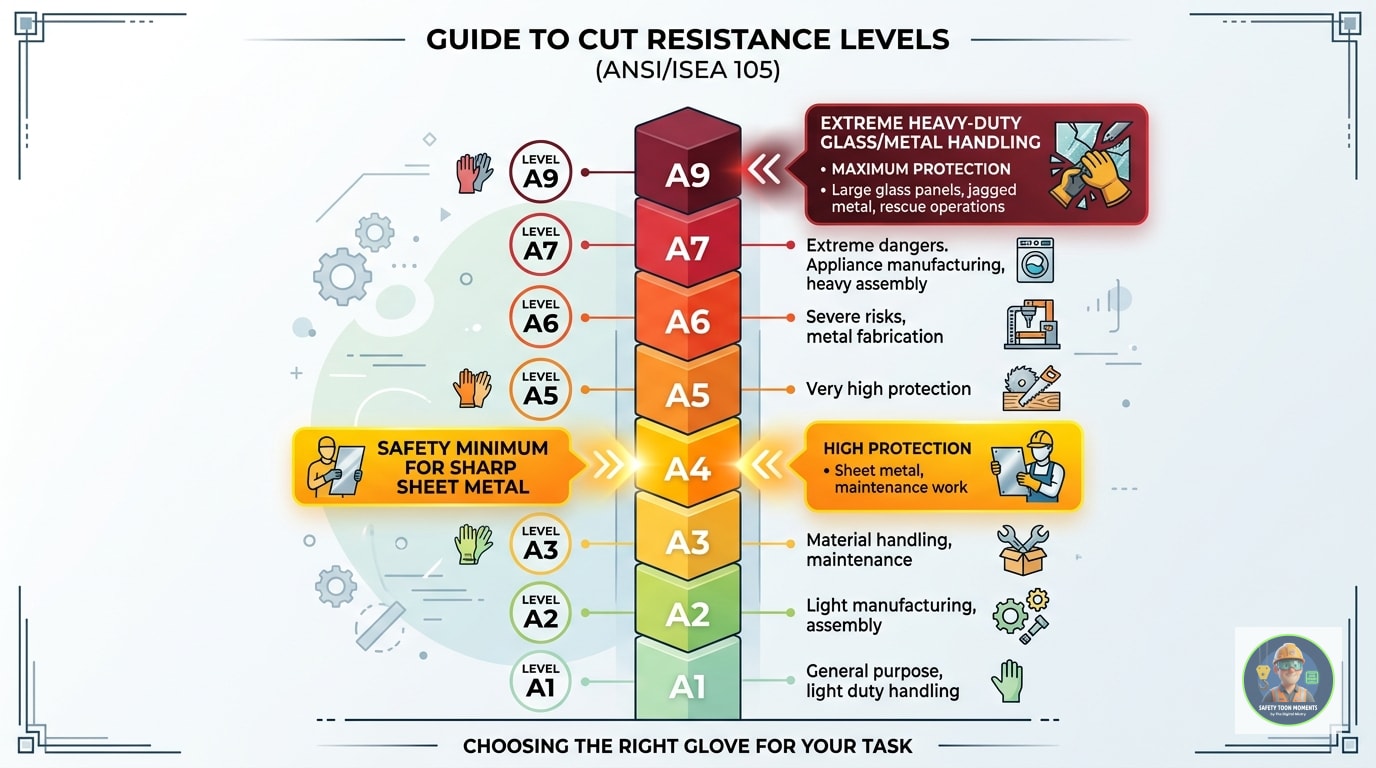
✅ 3. Decoding the Glove: Which One for Which Job?
One of the biggest mistakes in Indian shops is using "one glove for everything." This is dangerous.
- Leather Gauntlets (The Welder's Choice): Best for heat and sparks. Look for "Kevlar stitching" so the seams don't melt away.
- Cut-Resistant Gloves (The Sheet Metal Choice): Look for the ANSI Cut Level (A4 to A9). These use glass fiber or stainless steel mesh to stop blades from slicing your skin.
- Nitrile/Chemical Gloves: Use these when handling solvents. Never use leather for chemicals—the leather absorbs the toxin and keeps it pressed against your skin!
- Impact-Resistant Gloves: Feature rubber "bumpers" on the back. Essential if you are working with heavy hammers or rigging.
✅ 4. The "Golden Rule" of Rotating Machinery
This is a life-saving tip that every "Humanoid" worker must remember:
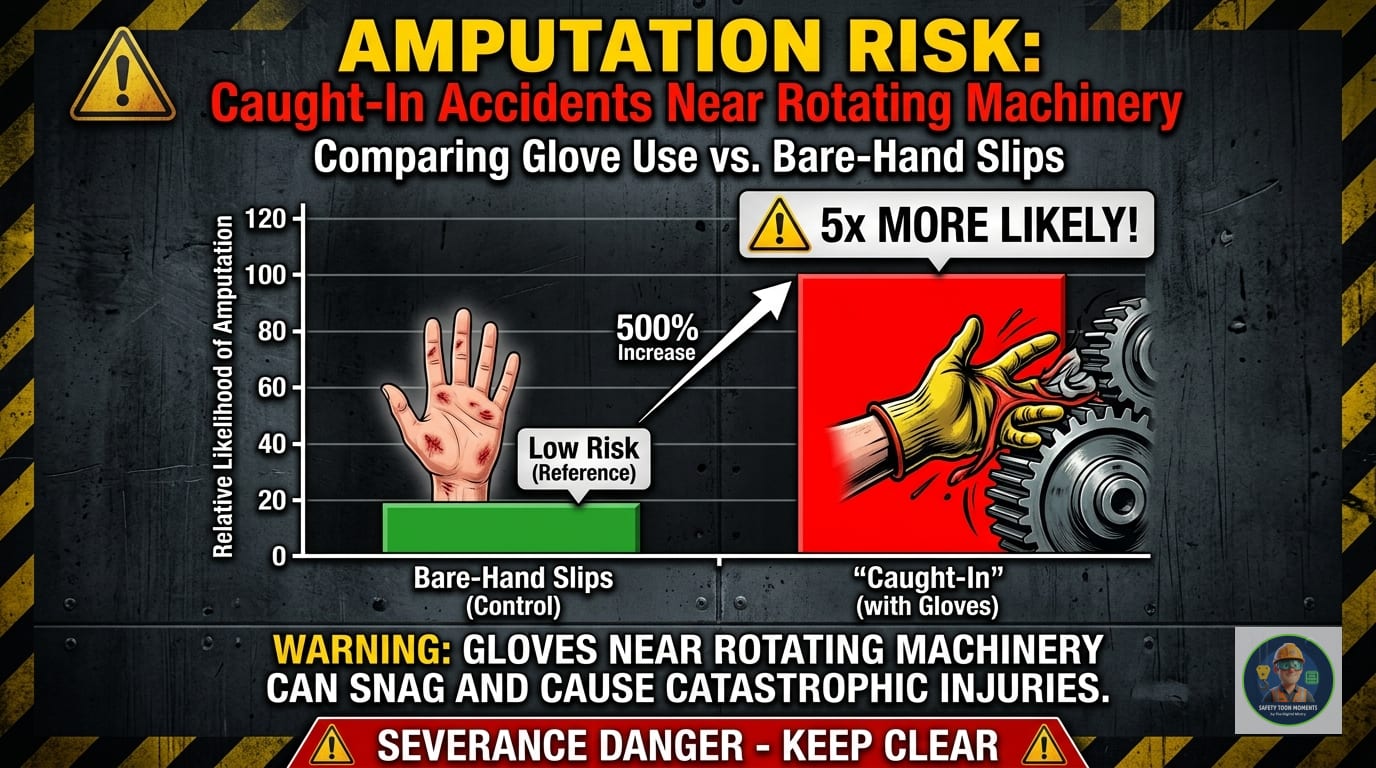
👉🏻 NEVER wear gloves near rotating equipment.
- Why? If you are using a drill press, a lathe, or a bench grinder, a glove can get "caught" in the spinning part.
- The Result: Instead of just a small scratch on your finger, the machine will pull your entire hand into the gears.
- The Solution: Bare hands (or very tight-fitting fingerless protectors) are safer for these specific machines.
✅ 5. Hand Health: It’s More Than Just Gloves
The "Ring" Danger:
- Never wear wedding rings or watches on the shop floor. They can cause "ring avulsion"—a horrific injury where the ring catches on a moving part.
Skin Care:
- Use barrier creams if you work with oils. Wash your hands thoroughly before eating to avoid ingesting metal dust (Lead/Manganese).
✅ 6. Emergency Action: What to do if an injury occurs
If a coworker suffers a hand injury:
- 👉🏻 For Cuts: Apply direct pressure with a clean cloth. Elevate the hand above the heart.
- 👉🏻 For Crushes: Do not move the fingers. Apply a cold pack and get an X-ray immediately.
- 👉🏻 For Amputations: Wrap the severed part in a damp, clean cloth, put it in a plastic bag, and place that bag on ice. Never put the part directly on ice!
✅ 7. Best Practices / Worker Checklist
- Are my gloves free of holes, oil, and grease? (Oily gloves can catch fire).
- Is the ANSI/IS cut level appropriate for the thickness of the metal I'm handling?
- Have I removed all jewelry (rings/watches) before starting my shift?
- If I am using a lathe or drill press, have I removed my gloves?
- Do I have a "Barrier Cream" applied if I'm working with solvents today?
🎯 Conclusion: Your Hands are Your Future
In the Indian fabrication industry, your skill is in your fingertips. By respecting the Factories Act requirements and choosing the right IS 6994 certified gloves, you ensure that you can continue to provide for your family and practice your craft for years to come.
Treat your hands like the precision instruments they are. Protect them.
Watch out video on https://youtu.be/pWFKiKrNuqY?si=J_9UKUdxfhK_uqFB