
Machine Guarding: Why "Just One Cut" Isn't Worth the Risk (Comprehensive Guide)
Introduction: The Split-Second Reality In a busy Indian fabrication shop, the rhythm of production is constant. The hiss of hydraulics, the hum of CNC motors, and the rhythmic thud of a power press create a symphony of productivity. But within that rhythm lies a hidden danger.
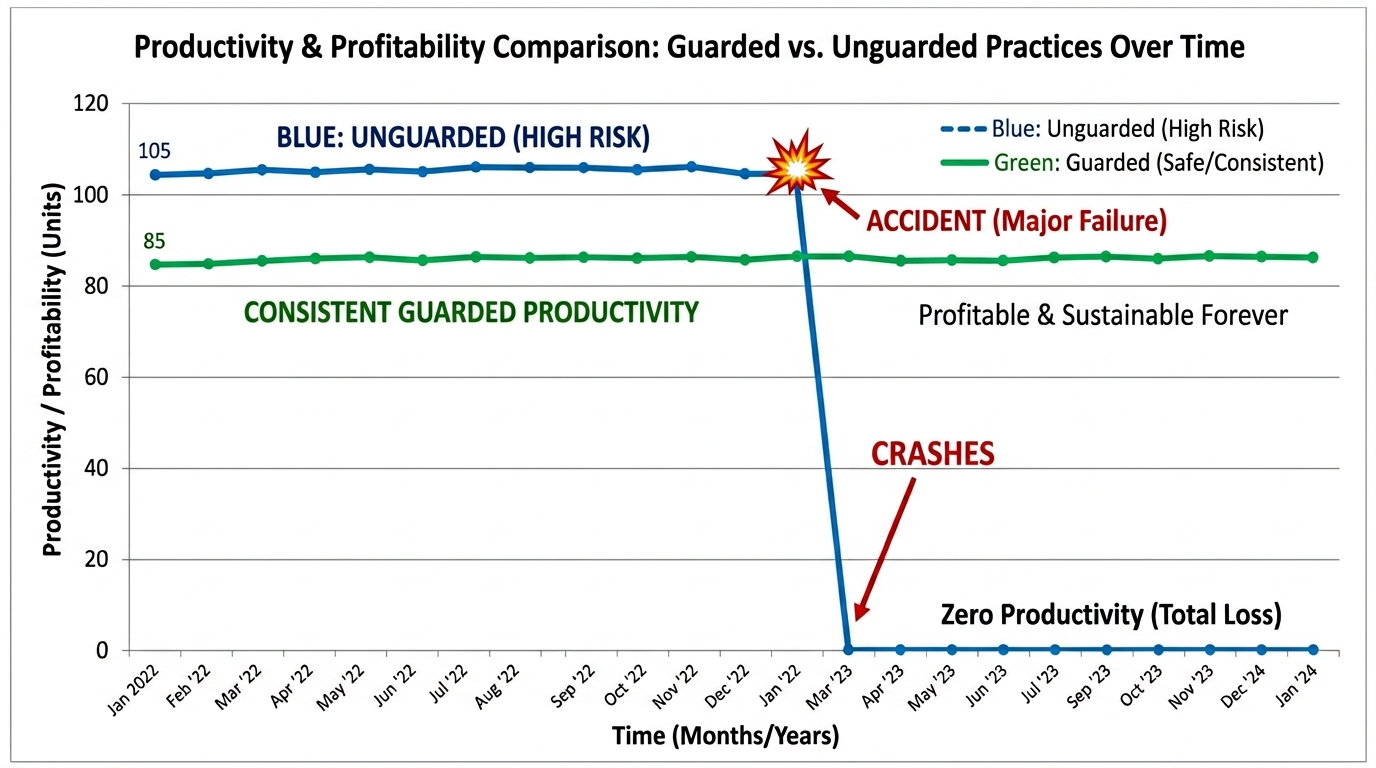
The Myth: "I've been doing this for twenty years; I know where the blade is." The Reality: Human fatigue, a distraction, or a simple slip happens in less than half a second. The Goal: Machine guarding is a physical barrier between a productive career and a life-altering injury.

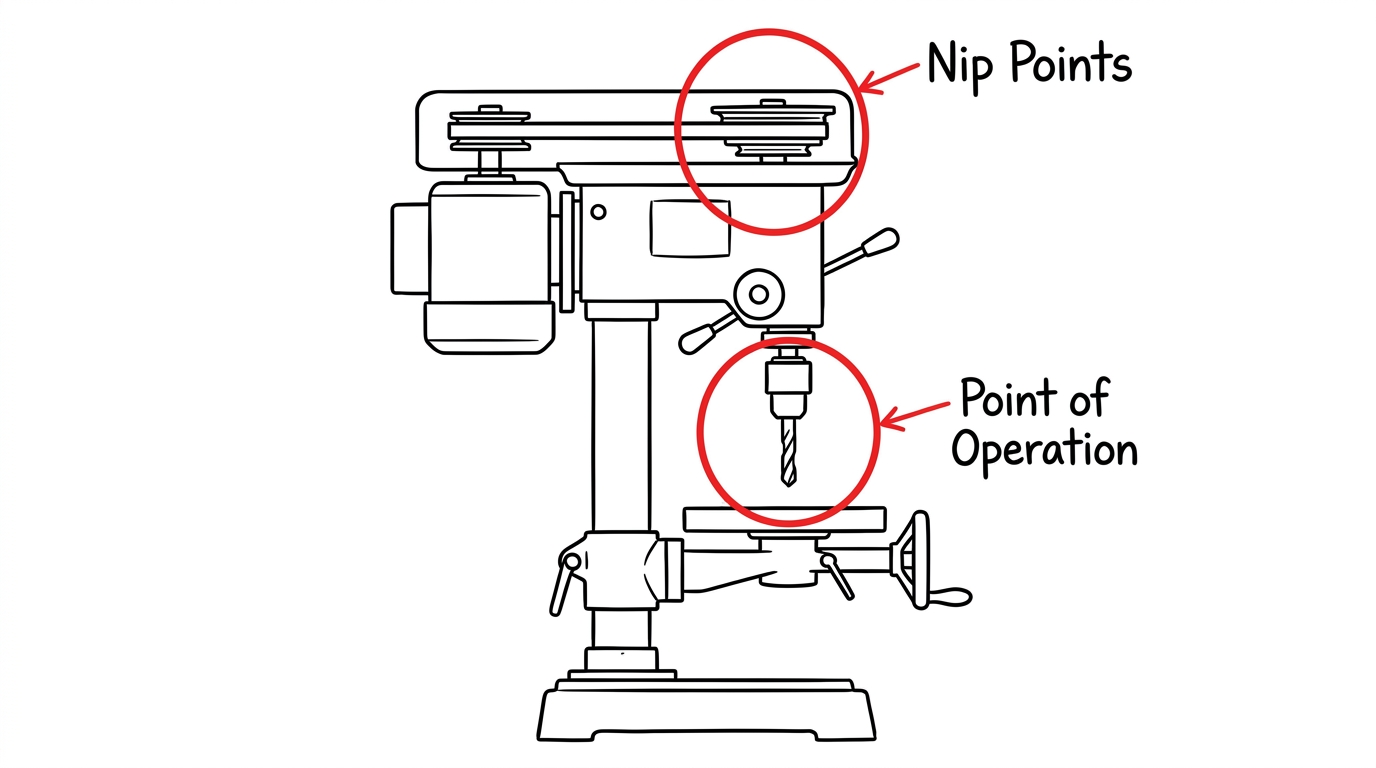
✅ 1. Understanding the Hazards: Where the Danger Lurks Before we talk about guards, we need to know what we are guarding against. In fabrication, mechanical hazards usually fall into three categories:
👉🏻 1.1 The Point of Operation:
- Where the work happens (cutting, shaping, boring).
- Example: The gap where a shear blade hits the sheet metal or where a drill bit enters the plate.
👉🏻 1.2 Power Transmission Apparatus:
- The "behind the scenes" moving parts.
- Example: Pulleys, V-belts on a lathe, flywheels, and chains. These can catch loose clothing or "gamchas" and pull you in.
👉🏻 1.3 Other Moving Parts:
- Parts that move back and forth or rotate during operation.
- Example: The reciprocating arm of a shaping machine or the rotating chuck of a manual lathe.
✅ 2. The Indian Legal Mandate: The Factories Act, 1948 Safety in India is governed by strict laws. The Factories Act, 1948 is very clear:
👉🏻 2.1 Section 21 (Fencing of Machinery):
- Mandates that every moving part must be securely fenced with "substantial construction." The guard must be strong enough to withstand an impact—no flimsy cardboard or thin wire.
- The "Rule of Strict Liability": The duty to guard is "absolute. Employers cannot blame a worker's "carelessness" if the machine wasn't guarded in the first place.
👉🏻 2.2 Section 22 (Work on Machinery in Motion):
- Only trained adult workers in tight-fitting clothes can examine moving machinery. Names of these workers must be in a specific register.
✅ 3. Types of Machine Guards: Your Shield in the Shop
- Depending on the machine, you need a specific type of protection:
👉🏻 3.1 Fixed Guards: Permanent barriers that don't move.
- Example: A metal cage over the side belts of a surface grinder.
👉🏻 3.2 Interlocked Guards: The machine won't start if the guard is open.
- Example: The sliding door of a CNC VMC (Vertical Machining Center).
👉🏻 3.3 Adjustable Guards: Can be moved to fit different material sizes.
- Example: The blade guard on a vertical band saw that you lower to just above the workpiece.
👉🏻 3.4 Self-Adjusting Guards: The material itself pushes the guard open.
- Example: A spring-loaded guard on a circular saw that snaps back after the cut.
✅ 4. Safety Devices: The High-Tech Watchmen When a physical "fence" gets in the way of work, use these devices:
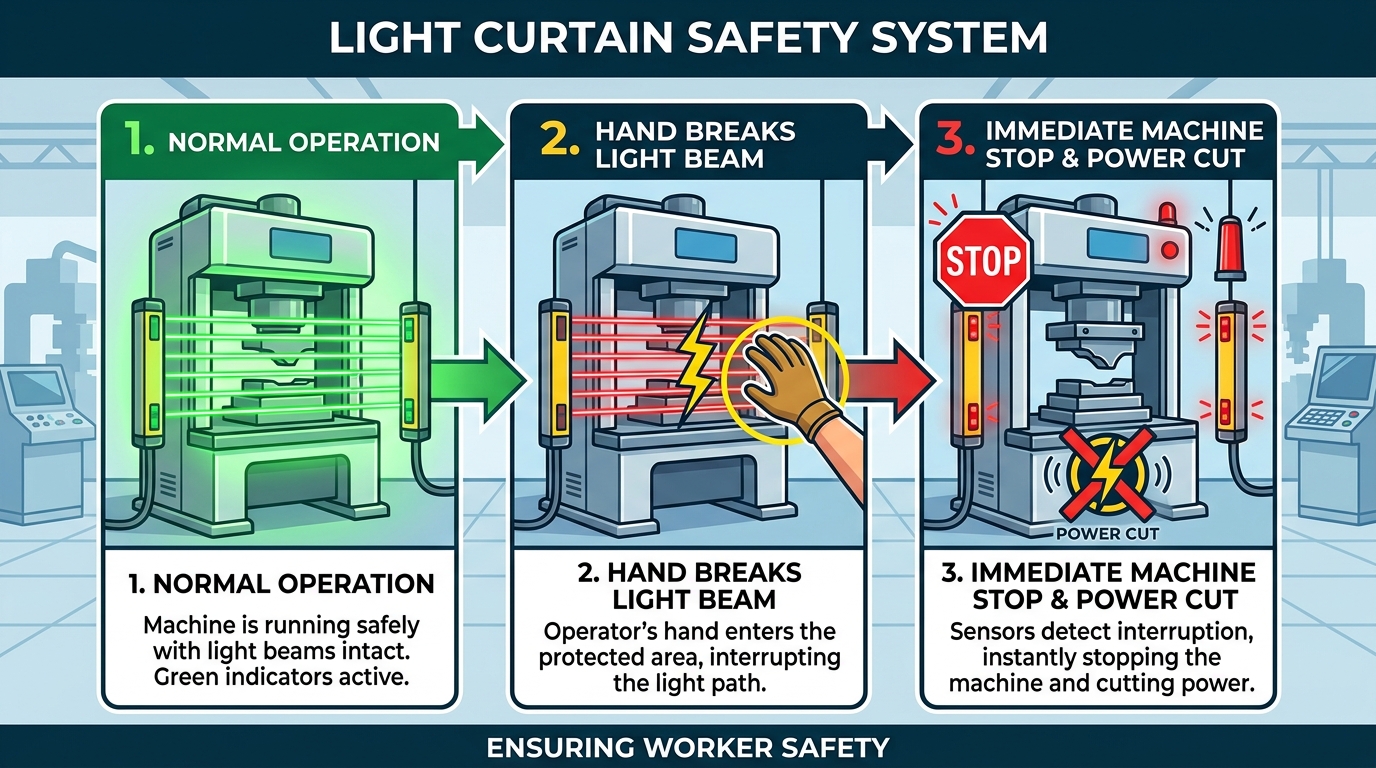
👉🏻 4.1 Photoelectric Light Curtains: Uses invisible light beams.
- Example: If your hand reaches into a Hydraulic Press Brake, the light beam breaks and the machine stops instantly.
👉🏻 4.2 Two-Hand Controls: Requires both hands to press buttons to start a cycle.
- Example: Used on power presses to ensure hands are not near the die.
👉🏻 4.3 Pressure-Sensitive Mats: Detects footsteps in a "no-go" zone.
- Example: Placed around a robotic welding cell to stop the robot if someone walks in.
✅ 5. Indian Standards (BIS) and Compliance Follow these codes to ensure your shop meets national quality standards:
- IS 9474: The core principles for mechanical guarding.
- IS 11016: Design and construction safety for work equipment.
- IS 5216: Safety for electrical interlock wiring.
✅ 6. Common Myths on the Shop Floor:
"It slows me down":
- Fact: A guard might add 1 second to a task; a finger injury adds 6 months to recovery.
"I can't see the workpiece":
- Fact: Modern guards use clear Polycarbonate. If it’s dirty, clean it—don’t remove it.
"This machine is from the 1980s, it's too old":
- Fact: The Factories Act applies to all machines. Retrofitting guards is a legal requirement.
✅ 7. A 60-Second Shift Checklist: Before you press 'Start,' check these five things:
[ ] Is the guard tight and not vibrating? [ ] Does the machine stop if I open the interlock door? [ ] Are there any "naked" belts or gears visible? [ ] Is the Red "Emergency Stop" button easy to reach? [ ] Is my clothing tucked in and my hair tied back?
🎯 Conclusion: Safety is a Shared Journey True Indian craftsmanship is about wisdom, not just skill. Respect the Factories Act and look out for your teammates. Let's make sure everyone goes home with the same number of fingers they arrived with.
Don't let "just this once" be the reason for a lifetime of regret. Inspect your guards today.